
NZ artist highlight - SCRIBE
- Publish date
- Tuesday, 12 May 2026, 3:56PM

Scribe: The Voice That Shifted A Generation
For New Zealand Music Month, Flava turns the spotlight on Scribe, an artist whose voice helped reshape the sound of Aotearoa.
When Stand Up dropped in 2003, it didn’t stay contained for long. It moved quickly through the country, finding its way into everyday life. You’d hear it in cars outside dairies, through blown-out garage speakers, at school socials, in sports sheds before training. It settled into shared moments and became part of how people experienced music at the time.
Then Not Many arrived, and its reach deepened. The hook travelled across different spaces and audiences, embedding itself into the country’s collective memory. Even people outside hip hop circles knew it word for word. It became familiar because it was everywhere.
At that time, New Zealand’s music landscape leaned heavily toward rock, with international sounds shaping what “big” looked like. Hip hop was present, carried forward by artists like Che Fu, King Kapisi, and 3 The Hard Way, but it was still building its space within the mainstream.
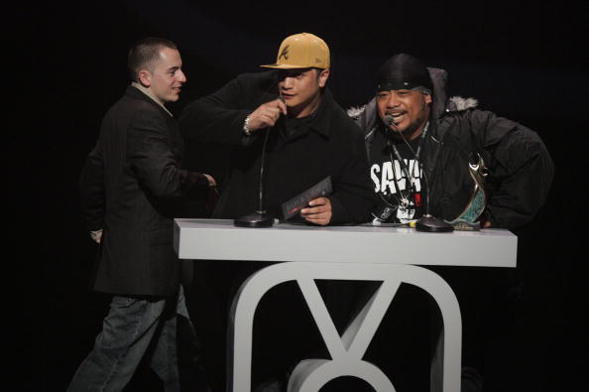
Hip Hop Artist Scribe accepts the Tui award for Song writer of the year along with P Money and Savage at the New Zealand Music Awards, 2004. (Photo by Sandra Teddy/Getty Images)
Scribe entered with a voice grounded in Aotearoa, shaped by his identity as a Samoan New Zealander.
Born Malo Luafutu in Christchurch, his delivery felt natural, local, and familiar, especially for Māori and Pasifika listeners. It reflected real life here, with no shift for overseas appeal.
His early years were shaped in Christchurch’s community spaces and underground scenes, surrounded by artists and collaborators like Kuru Apriana, Beats and Pieces, and DJ Ali. These were environments built on connection, where identity and creativity intertwined, and where young Māori and Pasifika artists were carving out space for themselves in their own way.
A move to Auckland as a teenager marked a turning point. Entering a city with a strong Pasifika presence, particularly in South Auckland, deepened that connection to culture and community. It also placed him closer to a growing wave of artists who were beginning to define their own sound and narrative within New Zealand music.
It was there that Scribe began refining his craft with intent, forming key relationships, including his partnership with producer P-Money.
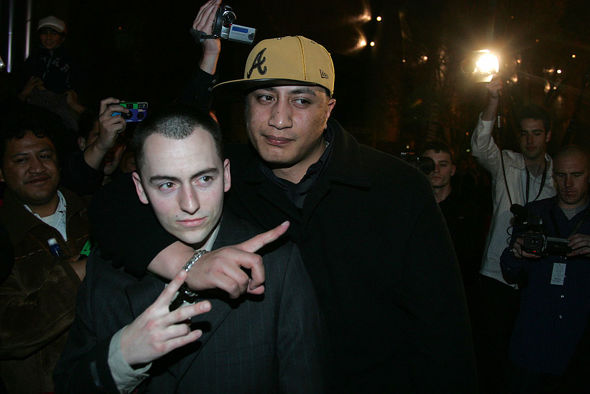
Producer P Money and Hip Hop artist Scribe arrives at the New Zealand Music Awards , 2004. (Photo by Sandra Teddy/Getty Images)
Together, they built a sound that carried both weight and clarity. Early tracks like Sunshine circulated through underground circles and gained recognition, hinting at something larger taking shape.
When Stand Up arrived, it landed with impact. The production was clean and commanding, and Scribe’s delivery met it with confidence and authority. The track reached number one, marking a turning point in how New Zealand hip hop could exist in the mainstream.
That momentum carried into The Crusader later that year. The album flowed naturally into everyday life across the country, playing through homes, cars, parties, and shared spaces. It wasn’t just heard, it was lived alongside.
For many Māori and Pasifika listeners, Scribe’s presence held deep weight. It wasn’t framed as representation, but it was felt as it. Seeing someone with a similar cultural background stand firmly at the centre of mainstream success, without reshaping who they were, created a sense of recognition that resonated beyond the music.
At the same time, Dawn Raid Records was building momentum from South Auckland. A collective rooted in Pacific identity and community, it created opportunities for artists to tell their own stories, in their own voices.
Scribe stood within this wider cultural shift, part of a generation redefining what New Zealand music looked and sounded like.
As his profile grew, attention followed. The focus began to widen beyond the music, bringing visibility to the pressures and realities that came with rapid success. Conversations expanded to include mental health, addiction, and the personal challenges that unfolded in public view.
His story became more layered over time, shaped by both achievement and struggle.
Today, that impact continues to sit across both.
When Not Many plays now, it brings people straight back to shared moments. Car rides, school days, crowded garages, nights where music connected everyone in the room without needing explanation. It reflects a time when people felt more collectively tuned into the same sound, the same artists, the same energy.
That feeling has shifted, but the imprint remains.
Seeing Scribe back performing, reconnecting with that energy and embracing his artistry again, adds another layer to a story that continues to evolve.
At Flava, Scribe is more than a moment. He is part of the culture. His voice, shaped by his roots, his community, and his journey, continues to resonate across generations in Aotearoa.

Want more on Scribe? You can catch Charlie, Azura, and K'Lee celebrate Scribe on the podcast episode below!
Take your Radio, Podcasts and Music with you